Category Archives: Uncategorized

Applying Web3 Concepts

Web3, the buzzy term for the next internet era based on blockchain technology, can foster a better customer experience in many use cases. For enterprises, a turnkey hosted decentralized application framework with the trust and privacy of blockchain built-in can enable better B2C applications, since the very design of blockchain allows companies to be everywhere all the time. When done right, Web3 concepts can be used to create personalized and frictionless experiences for consumers, while still guaranteeing privacy and security.

Below, we’ll break down a few examples of practical uses for Web3 concepts.

Web3 concepts in action

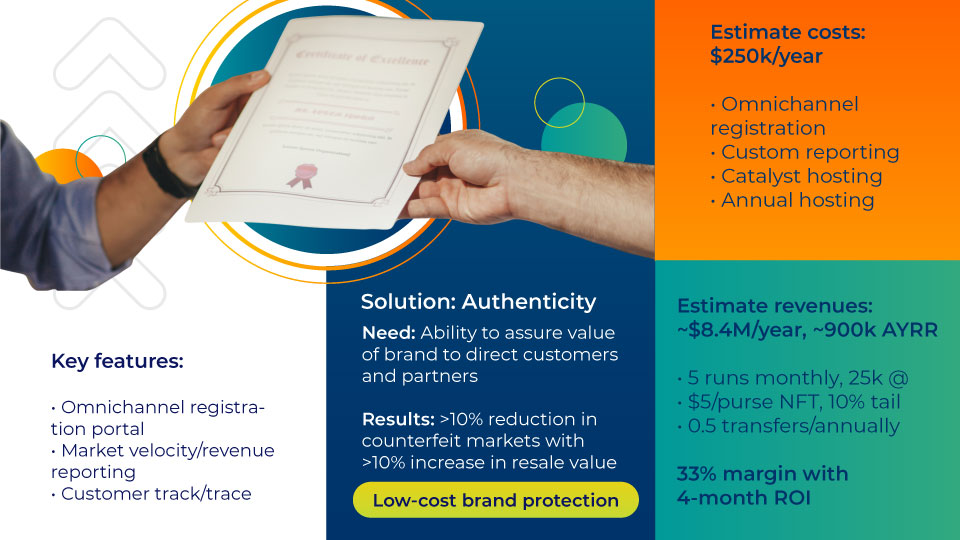
Let’s say you want to create a certificate of authenticity for a physical product you market, manufacture, and sell (like Nike does), or It could be a “badge” indicating attendance at an event (looking at you, AMC). To tie customers to your brand, you need a record of ownership that customers find value in now and over time. In a Web3 world, that’s called an NFT—non-fungible token. The art and card trading worlds are currently reinventing themselves with this technology, but it can also be used by enterprises. 

This digital artifact can be given to a customer to keep in their digital wallet (that is, their blockchain user account). When they want to resell that product or prove ownership, it’s available 24/7/365 at no cost to you (the manufacturer) or them (the owner).

What do you need?

The math in a real-life example can be useful. Let’s look at what you need for execution:

  • Omnichannel registration portal
  • Marketing data reporting solution, including revenue
  • Track and trace engine, to zoom in/zoom out of the data

This would cost you around $250k a year in a hosted software as a service (SaaS)-type framework. But what would that buy you? Say you want five limited edition runs monthly of around 25k NFT “badges.” The quantity changes barely affect the cost, but the results would be 1.5M NFTs a year, handed out to your customers digitally. You can charge for these items as you would for certificates of authenticity to the end customer or embed it in the cost. You can also add a “tail” to the NFT, in that when a transfer happens, you get a portion of the third-party sale as compensation for its creation. This feature could enable the solution to effectively pay for itself.
Applying Web3 concepts

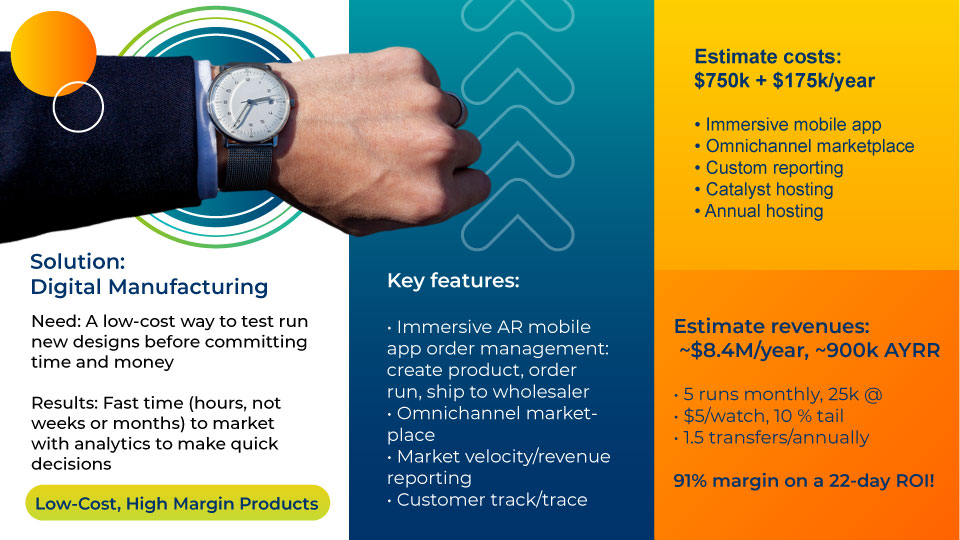
Let’s look at another use case, where you can provide a valuable, 100% digital product, like a media file—audio, visual, or audio-visual. We’ve built a use case around an immersive mobile application like Nike built, but this one is for watches. Consumers get exclusive, limited-edition designs from their favorite designers. The use case for the brand would be testing out new designs—to discover which designs are popular before investing millions of dollars and months to produce them. You would also need an omnichannel marketplace to go with the same portal and reporting solutions from before. The total cost of ownership is $750k with $175k/year. It’s a steep price for a campaign, but a cheap price for a factory to create unlimited digital products for pennies in minutes. The revenue potential here is telling:

  • MSRP: $5 with a 10% tail
  • 1.5 times a year the watch is re-sold
  • Selling the same 1.5M “watch” NFTs a year

This leaves you with an amazing $8.4M revenue stream with a recurring revenue stream of $900k. Yes, this means recurring revenue on products you already manufactured and sold. Our calculations are a 22-day ROI with 91% margin. Eliminating physical manufacturing and distribution shows its upside here.
Applying Web3 concepts

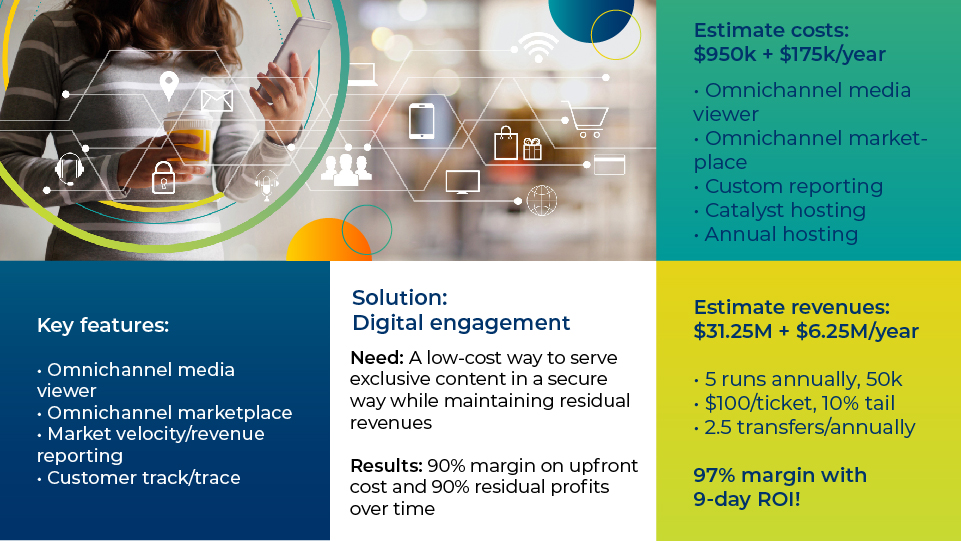
What if you create media content instead of apparel? Imagine seats for an exclusive event or a concert. Web3 can enable secure content digital distribution without using a middleman. The content would use an immersive customer experience, but the delivery method would be the same as before. The key importance of this use case is that you are not tied down by categorization or classification. If you can devise, market, and sell the experience, you can engage the customer using a Web3 lever.

Here are some specifics to the business we use:
Applying Web3 concepts

Advocates of Web3 see the ability to reduce latency and intermediaries between the businesses making products and the customers consuming them. They see a fully hosted network connecting us all, free to use to view and track, and one that costs us fractions of pennies for each product produced or sold. Using this technology allows enterprises to connect, serve, and learn from customers directly without the need of physical presence, third-party transaction go-betweens, and/or heavily regulated privacy limitations.

So, what’s the catch? The technology is new and the skills to do this work are limited. You need smart, experienced, and capable people to help you turn Web3 from a pipe dream into real-world products. We offer that expertise. With our turnkey technology, we facilitate test runs of publicly tradeable NFTs at a fixed price. Find out how we can turn your Web3 project into reality.
Why Web3 can improve enterprise CX

The hype around Web3 and how it can transform the internet | World Economic  Forum

By now, you’ve probably heard the tech buzzword “Web3” in the context of Bitcoin or NFTs of viral memes. Web3, considered to be the next iteration of the internet, is based on blockchain technology, allowing users to read, write, and own their data. However, what you might not know is that Web3 can be leveraged by enterprise organizations to guarantee consumer privacy and security while still allowing for better CX as an outcome.

Here are a few reasons why Web3 can be the future of CX.

Web3 vs. blockchain: A primer

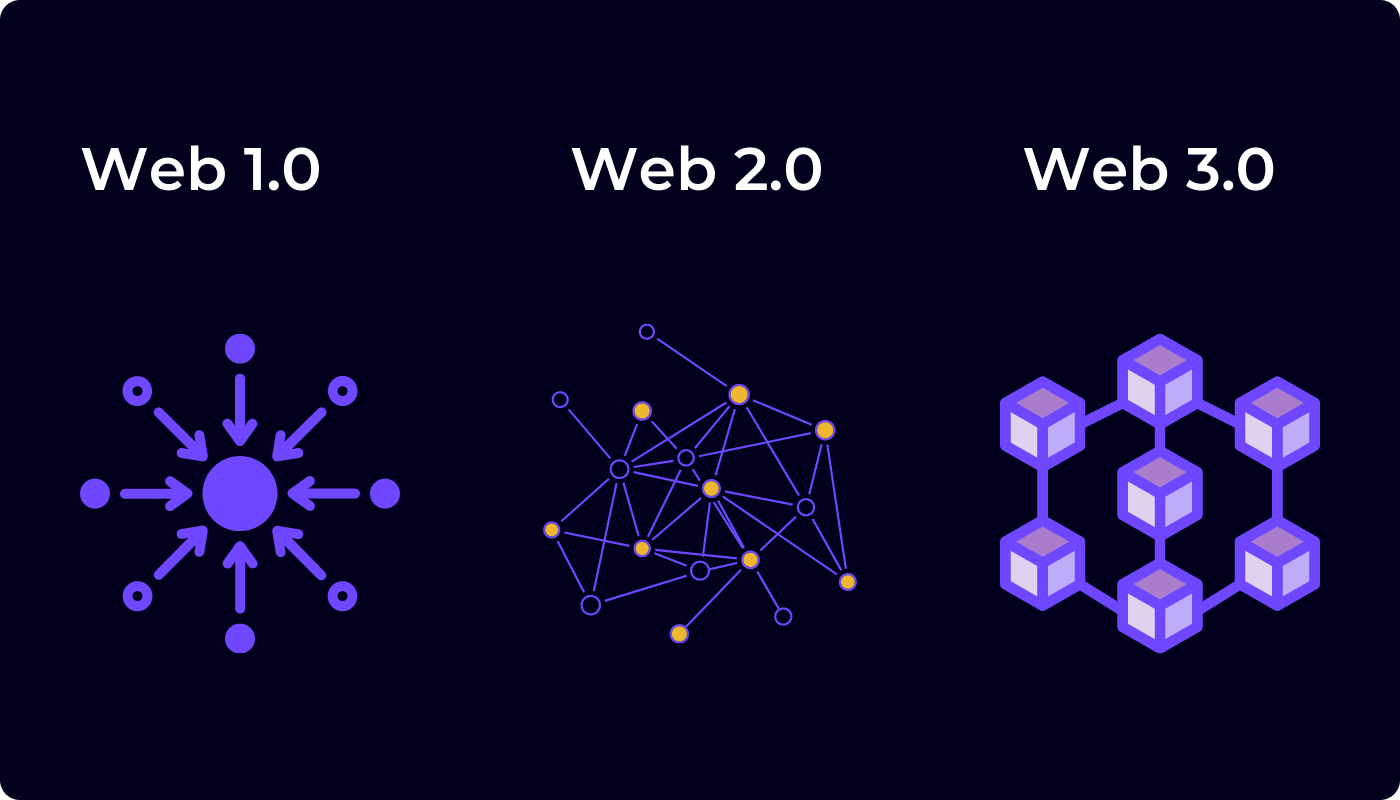
Blockchain is a distributed, decentralized ledger that records transactions securely, permanently, and efficiently. It is not controlled by any one entity, so it has no single point of entry. No one person or entity “owns” the information. The model is highly secure and can be applied to anything of value: currency, personal information, and data of any kind. Think of blockchain as a database arrayed in multiple redundant nodes in many locations. Web3 is the overarching trend that blockchain is a part of —it is the practice of using blockchain to accomplish business solutions beyond simply storing data. Web3 gets its name from its agreed-upon place in the evolution of the internet—the original internet made up of static HTML pages is known as “Web 1.0” and the transition to dynamic social media as Web 2.0. Thus, we’ve arrived at Web 3.0, or Web3.

Blockchain can be leveraged by smart developers to create what are called “smart contracts.” The name is a misnomer, as famous Web3 developers have said that they are neither “smart” nor “contracts.” If you are lost in the minutiae of this terminology, you are not alone. Elon Musk has famously said he is “too dumb to understand smart contracts.”

People get confused thinking that Web3 is the same as cryptocurrency. Though Web3 does include cryptocurrency, the key takeaway of this technology is that it can serve as a building block for enterprise solutions. It’s available to you turnkey and hosted in a public, private, and hybrid way—just like virtualized computers and databases—and adding blockchain to many enterprise solutions generates concrete business value.

But just because a technology is “cool” and hyped does not mean it’s relevant to your business. There is a lot of froth in the world of blockchain, so not all solutions branded as Web3 will yield much, if any, use value. The tenets of Web3, however, do allow for a more decentralized approach to applications and business services.

Why Web3 fits into CX strategy

Companies engage with customers where they are at. Nobody lives in the cloud. From an organizational perspective, however, the traditional challenge of being “everywhere all the time” for customers is expensive—for hosting, managing, and dealing with complexity. One such challenge of needing to be everywhere all the time is enabling point of sale and currency transactions. This is the origin story of blockchain to cryptocurrency to decentralized applications (dApps).

Why does Web3 matter to the enterprise? A turnkey hosted decentralized application framework with the trust and privacy of blockchain built in means fertile ground for B2C applications, by allowing for companies to be everywhere all the time. Web3 makes blockchain technology actionable.

Let’s say we want to create a certificate of authenticity for a physical product we market, manufacture, and sell (like Nike does). Remember the goal: we want to tie our customers to our brand. We need a record of ownership that our customers find value in now and over time. In a Web3 world, that is called an NFT—non-fungible token (a fancy way to say record of ownership). The art and card trading world is in the process of reinventing itself with this technology, but the same technology can be leveraged by enterprises.

This digital artifact can be given to a customer. That customer keeps it in their digital wallet (fancy way to say blockchain user account). When the customer wants to resell that product or prove ownership it is available 24/7/365 at no cost to you (the manufacturer) or them (the owner).

Get up and running with Web3

Advocates of Web3 see the ability to reduce latency and intermediaries between businesses making products and customers consuming them. They see a fully hosted network connecting us all, free to use to view and track, and one that costs us fractions of pennies for each product produced or sold. Leveraging this technology allows enterprises to connect, serve, and learn from customers directly without the need of physical presence, third party transaction go-betweens, and/or heavily regulated privacy limitations—resulting in a faster, more convenient, and more enjoyable experience for customers.

Implementing IoT for Your Sustainability Journey

You can’t manage what you can’t measure, and this is especially true for implementing IoT sustainability initiatives to reduce operational costs and increase efficiency.

Currently, investors and stakeholders are demanding measurable outcomes and economic benefits from ESG initiatives. Environmental benefits, in the form of energy savings, can return both carbon reduction and energy cost reduction. But achieving large savings, and doing so quickly, is hard to do. In addition, not a lot of people are aware of IoT’s role in accelerating sustainability initiatives, and that implementation is actually economically achievable.

In my latest webinar, I moderated a panel including representatives from Optio3 and Carbon Lighthouse. We discussed how businesses can transition toward measurable sustainability quickly and easily using IoT Edge technology.

If you missed the webinar, or would like to experience it again, watch the video below.

https://pkglobal.com/blog/2021/07/iot-sustainability/